In the rapidly evolving landscape of artificial intelligence, perhaps no field is as visually arresting or practically transformative as Computer Vision (CV). Once a niche sub-discipline of computer science focused on basic pattern recognition, Computer Vision research has blossomed into a global powerhouse, enabling machines to not only “see” but to interpret, understand, and react to the physical world with a precision that often rivals human capability.
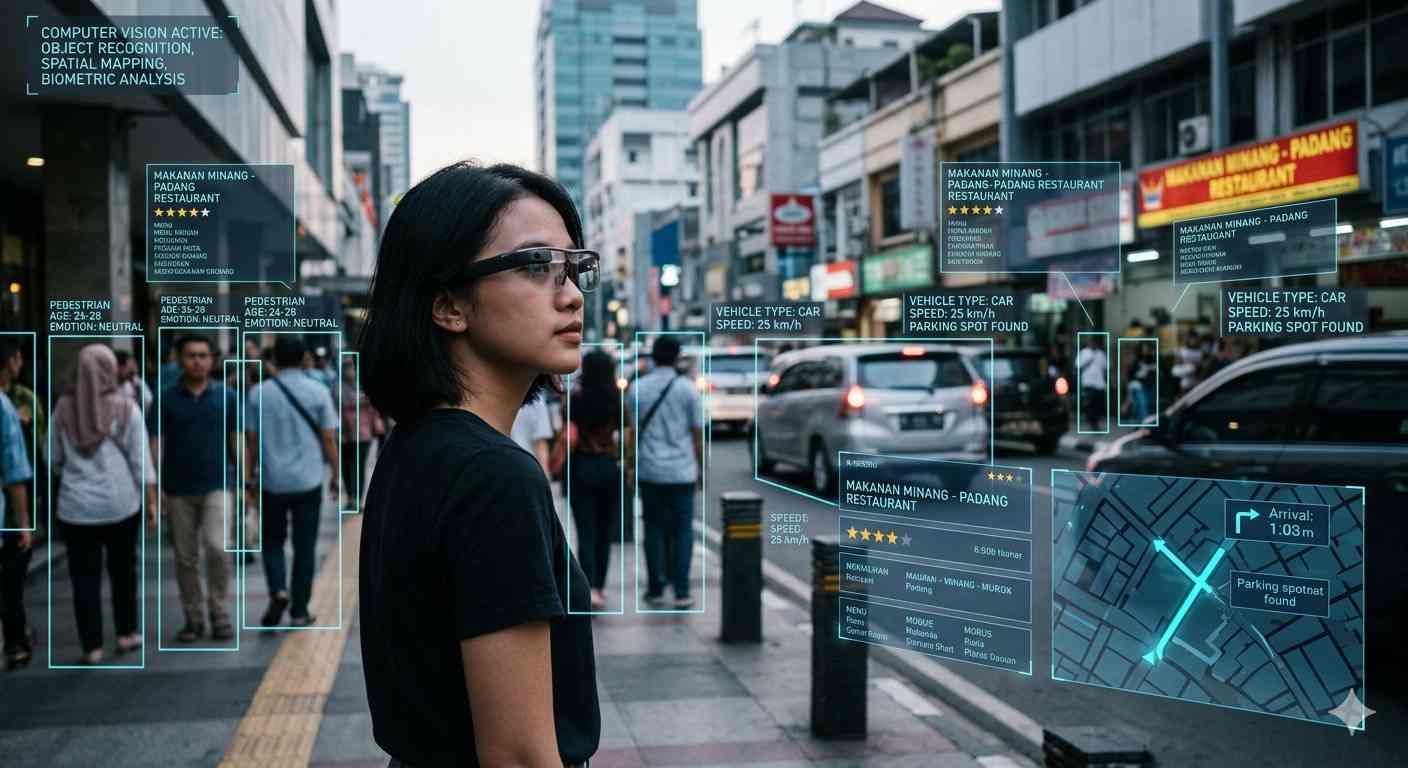
The Foundation of Sight: Understanding Computer Vision
At its core, Computer Vision research seeks to automate tasks that the human visual system can do. This involves developing algorithms that can process, analyze, and understand digital images or videos to produce numerical or symbolic information. While the human brain processes visual data effortlessly, translating that biological complexity into mathematical code is one of the greatest challenges of the 21st century.
Modern CV research is built upon the pillars of Deep Learning and Neural Networks. The shift from manual feature engineering—where researchers had to specify exactly what an “edge” or a “corner” looked like—to self-learning architectures like Convolutional Neural Networks (CNNs) has revolutionized the field. Today, researchers are pushing beyond simple classification to solve complex spatial and temporal problems.
Emerging Trends in Research
The current state of research is defined by several breakthrough areas that are moving the needle from academic theory to real-world utility.
1. Self-Supervised Learning (SSL)
One of the biggest bottlenecks in CV has always been the need for massive, human-labeled datasets. If you want a computer to recognize a cat, you traditionally need thousands of photos labeled “cat.” Self-supervised learning is changing this paradigm. Researchers are finding ways for models to learn from unlabeled data by predicting hidden parts of an image or identifying rotations. This reduces the reliance on manual labor and allows AI to learn from the vast, uncurated oceans of data available on the internet.
2. Vision Transformers (ViT)
For years, CNNs were the undisputed kings of vision tasks. However, inspired by the success of Transformers in Natural Language Processing (like the tech behind ChatGPT), researchers have adapted these architectures for images. Vision Transformers process images as sequences of patches, allowing the model to understand global context and long-range dependencies better than traditional methods. This shift is leading to more robust models that excel in complex scene understanding.
3. Generative Models and Latent Space
The rise of Generative Adversarial Networks (GANs) and Diffusion Models has moved CV from “understanding” to “creating.” Research in this area isn’t just about making “deepfakes” or AI art; it is about understanding the underlying geometry of the world. By learning how to generate a realistic 3D room, a model gains a deeper understanding of lighting, perspective, and object permanence.
Real-World Applications: From Labs to Life
Computer Vision research is not confined to university basements. Its applications are currently reshaping entire industries:
- Healthcare: CV research is pioneering “Medical Imaging AI.” Algorithms are now being trained to detect anomalies in X-rays, MRIs, and CT scans, often spotting early-stage cancers or neurological issues that might be invisible to the tired human eye.
- Autonomous Systems: Self-driving cars and drones are perhaps the most visible outcomes. Research into “Simultaneous Localization and Mapping” (SLAM) and “Sensor Fusion” allows vehicles to navigate unpredictable environments safely.
- Retail and Logistics: From “Just Walk Out” shopping technology to automated warehouse sorting, CV research is optimizing the global supply chain by identifying objects and human intent in real-time.
Challenges and Ethical Frontiers
Despite the meteoric progress, the road ahead is fraught with challenges. One of the primary focuses of current research is Explainability. As CV models become more complex, they often act as “black boxes.” If a medical AI diagnoses a patient, doctors need to know why it reached that conclusion. Research into “Explainable AI” (XAI) aims to make these visual decisions transparent and trustworthy.
Furthermore, the issue of Bias and Fairness remains a critical research frontier. If the training data lacks diversity, the resulting vision systems can fail or behave unfairly toward specific demographics. Modern researchers are working on “Bias Mitigation” techniques to ensure that vision systems are equitable and inclusive.
The Future: Toward General Visual Intelligence
The ultimate goal of Computer Vision research is to move toward “General Visual Intelligence.” This means creating systems that don’t just perform a single task—like identifying a license plate—but can understand a scene holistically. We are moving toward models that understand cause and effect: “If that glass falls off the table, it will shatter.”
We are also seeing an intersection between Computer Vision and other senses, known as Multimodal Learning. This research investigates how visual data can be combined with audio and text to create a more complete “common sense” for artificial intelligence.
Conclusion
Computer Vision research is more than just a technical pursuit; it is a fundamental shift in how humanity interacts with technology. By giving machines the gift of sight, we are unlocking efficiencies in medicine, safety in transportation, and new dimensions in creativity. While challenges regarding ethics and data privacy persist, the trajectory of the field suggests a future where the boundary between biological and digital sight becomes increasingly blurred.
As we look forward, the focus will likely shift from making models “bigger” to making them “smarter” and more efficient. Whether it is through self-supervised learning or the integration of 3D spatial awareness, the next decade of Computer Vision research promises to be as transformative as the invention of the camera itself. For researchers and enthusiasts alike, the vision of the future has never been clearer.