In the fast-paced world of global logistics and e-commerce, the warehouse is no longer just a storage space; it is the beating heart of the supply chain. With rising operational costs and increasing customer demands for lightning-fast delivery, warehouse managers are under immense pressure to do more with less.
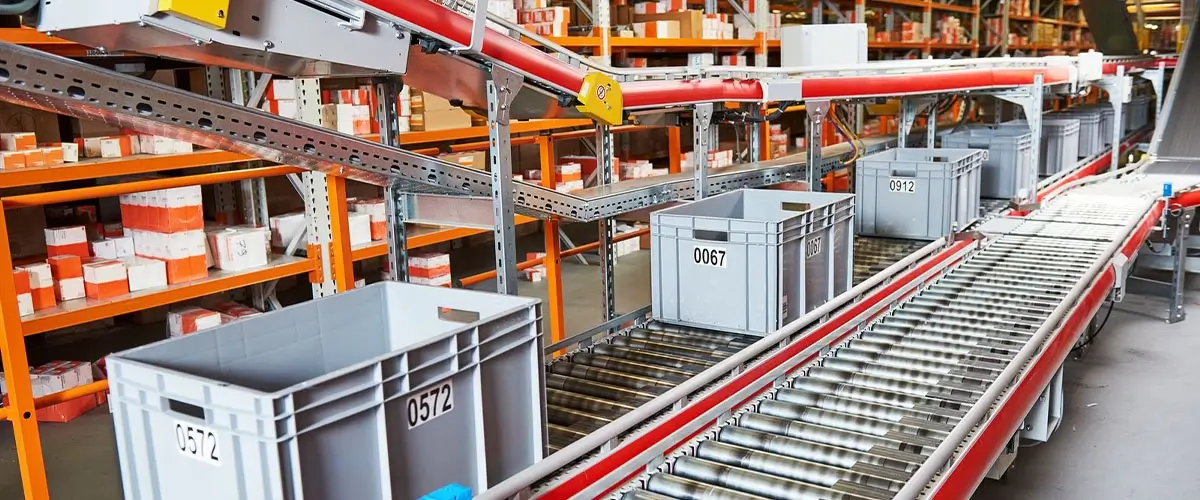
Efficiency in a warehouse isn’t just about moving faster; it is about moving smarter. By reducing “touches,” minimizing travel time, and leveraging data, businesses can significantly boost their bottom line. Here are three transformative ways to increase your warehouse efficiency and stay ahead of the competition.
1. Optimize Your Warehouse Layout and Slotting Strategy
The physical arrangement of your inventory is perhaps the most significant factor in daily productivity. Every second a picker spends walking across a vast floor is a second of lost revenue.
- Implement ABC Analysis: Categorize your inventory based on velocity. “A” items (top 20% that account for 80% of orders) should be placed in the most accessible areas near the packing stations. “B” and “C” items should be stored further back.
- Utilize Vertical Space: Many warehouses ignore the cubic footage above their heads. Invest in high-density racking systems and specialized equipment like reach trucks to maximize storage without expanding the building’s footprint.
- Design for Cross-Docking: If possible, arrange your layout to facilitate cross-docking, where incoming goods are moved directly to outbound shipping with minimal or no storage time. This reduces handling costs and speeds up the delivery cycle.
2. Leverage Warehouse Management Systems (WMS) and Automation
In 2026, relying on paper-based picking lists or manual data entry is a recipe for error. Digital transformation is the cornerstone of modern warehouse efficiency.
- Real-Time Data Tracking: A robust Warehouse Management System (WMS) provides a “single source of truth.” It tracks inventory levels, locations, and worker productivity in real-time, allowing managers to identify bottlenecks as they happen.
- Barcode and RFID Integration: Scanning technology eliminates the human error associated with manual counting. RFID (Radio Frequency Identification), in particular, allows for the scanning of entire pallets instantly, drastically reducing receiving and shipping times.
- Collaborative Robotics: You don’t need a fully “dark” warehouse to benefit from automation. Collaborative robots (cobots) or Autonomous Mobile Robots (AMRs) can handle the “travel” portion of the job—moving picked items from the aisles to the packing station—allowing your human staff to stay in their zones and focus on high-value tasks.
3. Refine Your Picking Processes and Labor Management
Picking accounts for roughly 50% to 60% of total warehouse operating costs. Even a small improvement in this area can lead to massive cumulative gains.
- Adopt Advanced Picking Methods: Move away from “single order picking” if your volume is high.
- Batch Picking: One picker collects items for multiple orders at once.
- Zone Picking: Pickers stay in a designated area (like a grocery store aisle) and only pick items located in that zone.
- Wave Picking: Aligning picking schedules with shipping departures or carrier arrival times to ensure a smooth flow.
- Invest in Ergonomics: A tired or injured worker is an inefficient worker. Provide anti-fatigue mats, adjustable packing stations, and proper training on lifting techniques. Happy, healthy employees have lower turnover rates and higher accuracy.
- Continuous Training and Feedback: Use the data from your WMS to provide constructive feedback. Gamification—where workers are rewarded for meeting accuracy and speed benchmarks—can foster a culture of excellence.
Conclusion: The Path to a Leaner Warehouse
Increasing warehouse efficiency is not a one-time project; it is a continuous journey of refinement. By optimizing your physical layout, embracing the power of a modern WMS, and streamlining your picking methods, you can create a lean, agile operation capable of handling the pressures of modern commerce.
When your warehouse runs like a well-oiled machine, the benefits ripple outward—resulting in shorter lead times, happier customers, and a much healthier profit margin.
Would you like me to create a customized “Warehouse Audit Checklist” to help you identify which of these areas needs the most urgent attention in your facility?