We are currently living through a period that historians may one day refer to as the “Great Integration.” In 2026, the frantic excitement that surrounded the initial launch of generative AI has matured into something far more profound: a seamless, almost invisible fusion of intelligence, physics, and biology. The best new technologies of this year are no longer just “digital tools”; they are foundational shifts that are redefining how we heal our bodies, secure our data, and interact with the physical world.
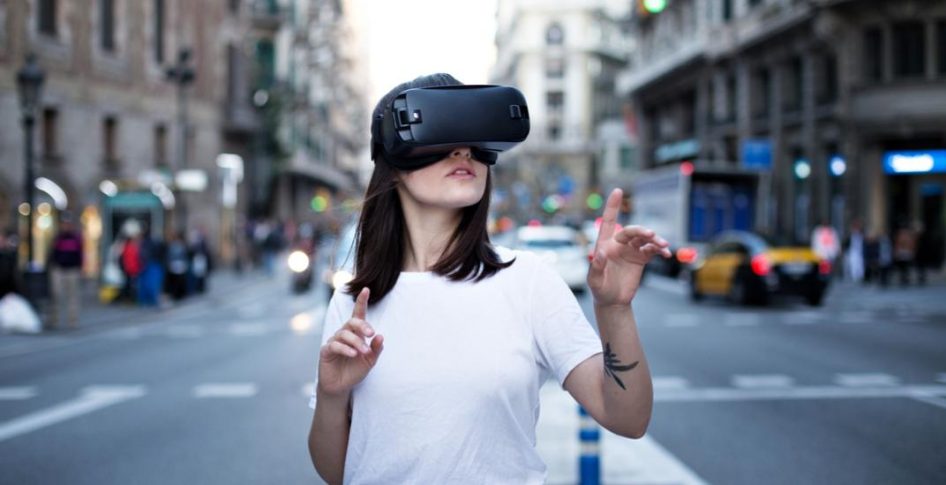
From the emergence of physical AI to breakthroughs in quantum stability, the technological landscape of 2026 is characterized by “Innovation Fusion.” This article explores the most impactful technological advancements currently shaping our global reality.
Physical AI: Giving Intelligence a Body
For several years, artificial intelligence existed primarily behind screens, processing text and generating images. In 2026, we have moved into the era of Physical AI. This represents the integration of Large Language Models (LLMs) with advanced robotics and sensor arrays, allowing AI to perceive and manipulate the physical world with human-like dexterity.
In industrial sectors, this manifests as “Agentic Robotics,” where machines don’t just follow a script but understand the intent of a task. In our homes, this has led to the rise of truly autonomous home-help robots capable of performing nuanced chores, such as folding laundry or organizing a kitchen, by “seeing” and understanding the geometry of objects in real-time. This shift from digital assistants to physical collaborators is arguably the most significant change in consumer technology this year.
Healthcare Revolution: Brain-Computer Interfaces and Preventive AI
The medical field is currently experiencing a “Golden Age” driven by two specific technological pillars: invasive Brain-Computer Interfaces (BCIs) and AI-driven preventive diagnostics.
As evidenced by the major breakthroughs debuted at the 2026 Global Medical Device forums, the world’s first commercial-grade invasive BCIs are beginning to move from clinical trials to real-world applications. These devices are restoring mobility and communication to patients with severe neurological impairments by translating neural signals directly into digital commands.
Concurrently, healthcare has shifted from a “reactive” model to a “proactive” one. New wearables in 2026 are equipped with sophisticated sensors that monitor metabolic markers in real-time. Combined with personal health AI, these devices can predict potential cardiovascular events or blood sugar spikes days before they occur, effectively turning the smartwatch into a life-saving medical laboratory.
Quantum Stability: Unlocking Exotic States of Matter
Quantum computing has long been plagued by “noise”—the tendency of quantum bits (qubits) to lose their data due to environmental interference. However, May 2026 has brought a landmark breakthrough in quantum physics and materials science.
Researchers have successfully used “Floquet Engineering”—the process of driving materials with timed magnetic shifts—to create exotic forms of matter that do not exist under normal conditions. These new quantum states are significantly more stable and resistant to errors. This breakthrough suggests that we are closer than ever to “Quantum Advantage,” where quantum computers can finally solve cryptographic and molecular simulation problems that are impossible for even the most powerful traditional supercomputers.
Preemptive Cybersecurity and Digital Provenance
As AI has become more powerful, so have the threats associated with it. In 2026, traditional firewalls are no longer sufficient. The new standard is “Preemptive Cybersecurity,” an AI-native defense architecture that doesn’t just react to attacks but predicts them by analyzing global patterns of adversarial behavior.
Furthermore, the “Digital Provenance” movement has reached its peak. With the rise of hyper-realistic deepfakes, new cryptographic watermarking technologies are now embedded at the hardware level in cameras and smartphones. This ensures that every piece of digital content—whether a video, photo, or audio clip—can be traced back to its original source, restoring a much-needed sense of trust to the digital ecosystem.
Green Tech: The Shift to Circular Electronics
Sustainability in 2026 is no longer a marketing buzzword; it is a technological requirement. The “Best New Tech” list this year must include the rise of circular electronics. Leading manufacturers are now utilizing “Modular Assembly Technology,” allowing consumers to easily swap out sensors, batteries, or processors without discarding the entire device.
Beyond consumer tech, we are seeing the mainstreaming of “Solid-State Battery Technology.” These batteries, which offer higher energy density and faster charging than traditional lithium-ion, are finally being integrated into mass-market electric vehicles and long-range drones, effectively solving the “range anxiety” that previously hindered the green energy transition.
Conclusion
The technology of 2026 is defined by its ability to feel more human, more intuitive, and more responsible. We have moved past the era of gadgets that simply “do things” and entered an era of systems that “understand context.” Whether it is a quantum computer solving the climate crisis, a BCI restoring a person’s voice, or a physical AI assisting in a warehouse, the common thread is a move toward a more integrated and capable future.
As we navigate this “Boundless Evolution,” the focus for businesses and individuals alike should be on adaptability. The best technology isn’t just the most powerful—it is the tech that empowers us to live more efficiently, sustainably, and healthily in a rapidly changing world.